Melatonin Strips vs Pills: Which Absorbs Faster?
Last updated: July 1, 2026
Strips win on speed. A NuStrips Sleep strip dissolves on your tongue in about 30 seconds, and its melatonin absorbs through the tissues in your mouth almost immediately — no water, no gulping down a pill. A pill detours through your stomach and liver, so melatonin in pill form absorbs at just 3–15% of the label dose.1,2
Key takeaways
- Faster in: a strip dissolves in ~30 seconds; an in-mouth melatonin delivery peaked in the blood at ~23 min vs ~64 min for a tablet you gulp down.4
- Less wasted: melatonin pills run just 3–15% bioavailability after the liver's first pass — strips skip that detour.1,2
- No water, no pill fatigue: you place it on your tongue, so it works for people who are done gulping down tablets.
- Pills win on price: generic tablets cost pennies per dose; strips cost more but waste less and travel easier.
- Safety is about the molecule, not the format: melatonin is generally well tolerated and not habit-forming like prescription Z-drugs, but it interacts with some medications — talk to your doctor.7,8
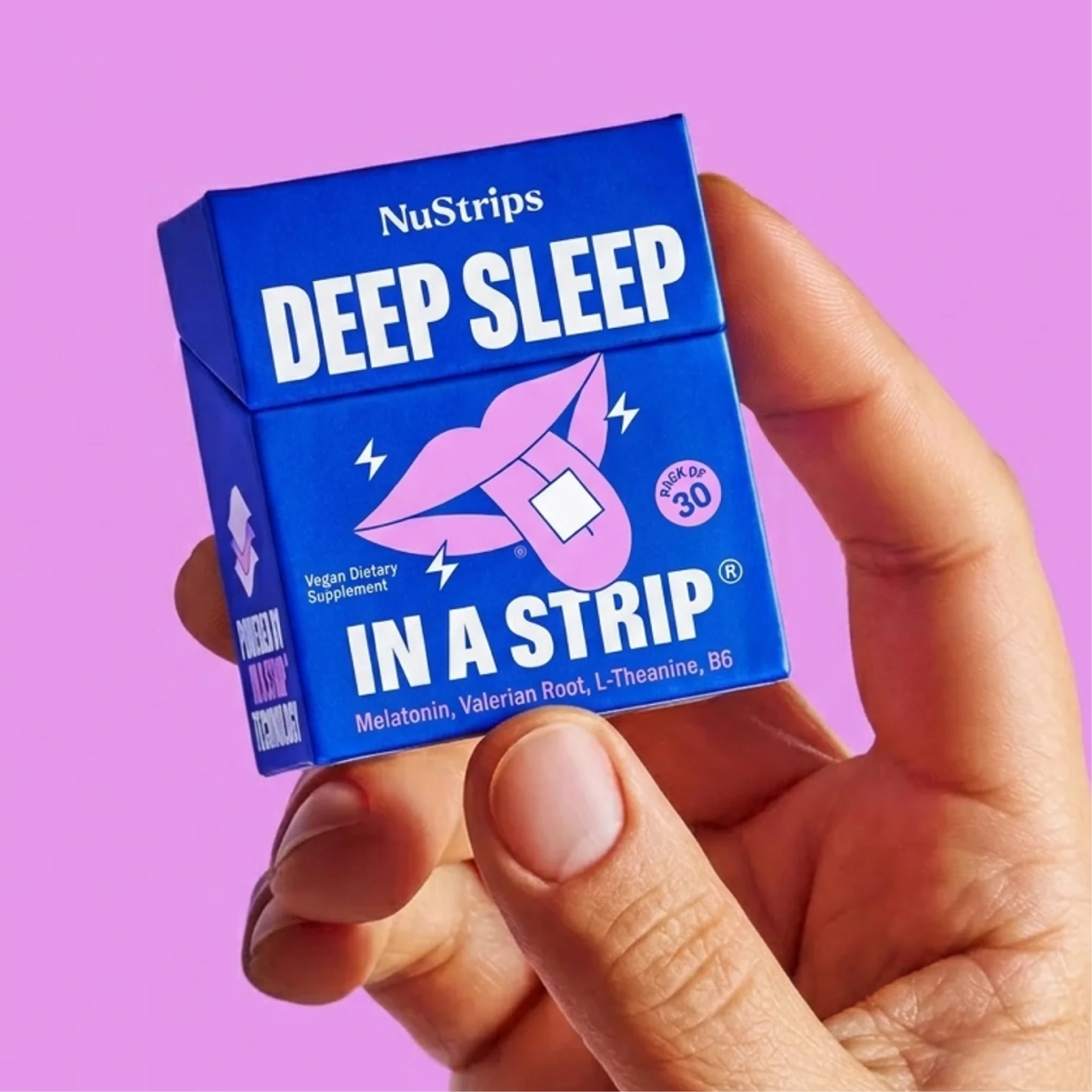
Do melatonin strips really absorb faster than pills?
Short answer: yes, and it comes down to the route each one takes to your bloodstream. A melatonin strip is built for on-your-tongue absorption. It dissolves in seconds, and the melatonin passes through the thin, blood-vessel-rich tissues in your mouth straight into circulation — skipping your stomach and liver entirely.
A pill can't do that. It has to physically break down in your gut before anything gets absorbed, and then everything it releases is routed through your liver first. Your body treats a pill like food, not like a fast pass to your bloodstream. Same active ingredient, completely different delivery — and the delivery is where strips pull ahead. The chart below shows the gap in plain terms.
Why do melatonin pills lose so much of their dose?
Blame the "first-pass" effect. When you gulp down a melatonin pill with water, it lands in your stomach, dissolves, and gets absorbed through your intestinal wall. But before that melatonin can circulate to the rest of your body, it's funneled directly through your liver — and your liver's whole job is to filter and break down compounds it sees. An enzyme called CYP1A2 metabolizes a large share of the melatonin on this first pass, so only a fraction of what you actually took makes it out the other side.
How big a fraction? The research is humbling. A frequently-cited study in the Journal of Clinical Pharmacology put the absolute bioavailability of an oral melatonin dose at roughly 15%.1 A later pharmacokinetics study in BMC Pharmacology and Toxicology found it can run as low as 3%.2 Translation: with a pill you gulp down, you often absorb a small slice of the number printed on the bottle — and the rest is broken down before it can do anything.
How do melatonin strips get around the liver detour?
By not taking the detour. NuStrips Sleep strips — built on our patented In A Strip® format — are made for oral absorption. The strip dissolves on your tongue in about 30 seconds, and the melatonin absorbs through the tissues in your mouth, which are packed with blood vessels sitting just beneath a very thin surface. That means a meaningful portion of the dose can reach your bloodstream directly, instead of being routed through your liver and broken down before it counts. NuStrips created the oral strip supplement category — 20M+ strips sold since 2020.
This isn't a NuStrips theory — it's the same rationale behind fast-acting melatonin formats studied in the clinic. A 2023 paper in Drugs in R&D tested a melatonin delivery designed to absorb in the mouth against a tablet you gulp down and found it not only peaked faster (about 23 minutes versus about 64) but reached roughly double the peak blood concentration — while carrying only about half the dose — with less of the melatonin lost to the liver.4 Fewer stops between the strip and your system means a faster, more efficient handoff. Want the deeper mechanism? We break it all down on our melatonin absorption science page.

How fast does each format kick in?
Onset is the headline difference. Here's how melatonin strips stack up against the pills and gummies most people reach for, with the clinical onset numbers where they exist:
| Format | How you take it | Typical onset (time to peak in blood) | How it's absorbed | Water needed? |
|---|---|---|---|---|
| Melatonin strip | Dissolves on your tongue in ~30 seconds | Fast — an in-mouth delivery peaked at ~23 min in one study4 | Through the tissues in your mouth; skips stomach + liver | No |
| Melatonin pill / capsule | Gulp down with water | Slower — a tablet you gulp down peaked at ~64 min4 | Through the gut, routed through the liver (3–15% bioavailability1,2) | Yes |
| Melatonin gummy | Chew and gulp down | Slower — digested like food, plus added sugar | Through the gut, routed through the liver | Not required |
Why does the same dose hit people differently? Melatonin's bioavailability is famously variable — a New England Journal of Medicine report documented how widely it swings from person to person, largely because everyone's liver clears it at a different rate.3 Age, genetics, other medications, even what you ate can move the number. That variability is exactly what an in-mouth format sidesteps: the less a dose leans on your digestion and liver, the more consistent what reaches your bloodstream tends to be. "Faster," though, isn't a medical promise about the exact minute you'll feel sleepy — everyone's body is different. For a closer look at timing, see how fast melatonin strips work.
What's actually in a NuStrips Sleep strip?
No mystery mix. Every Sleep strip is a single, pre-measured dose you can read right off the panel:
- Melatonin, 5 mg — the main sleep-timing ingredient, and the one with the strongest case for on-your-tongue absorption.†
- L-Theanine, 10 mg — an amino acid that supports a calm, settled feeling; studied for easing stress and supporting sleep quality.5†
- Valerian Root Extract, 15 mg — a traditional sleep herb; a meta-analysis of 16 trials linked it to better odds of improved sleep.6†
- Vitamin B6, 5 mg — a cofactor your body uses in its own melatonin and serotonin production.†
That's the whole active list — melatonin plus three supporting players, blueberry-flavored, zero sugar, sweetened with monk fruit and stevia, 30 strips per pack. No filler, no vague "sleep complex." If you like knowing exactly what melts on your tongue, that's the point.

Are melatonin strips and pills equally safe?
For most healthy adults, melatonin is considered safe for short-term use in either format, and side effects are usually rare and mild. When they do show up, the most commonly reported are daytime drowsiness, headache, dizziness, and nausea — and they're tied to the melatonin itself, not to whether it arrived as a strip or a pill.7 The format changes how much of the dose you absorb; it doesn't change melatonin's safety profile.
What matters more than format is what else you're taking. Melatonin can interact with several common medications, and here a strip is no different from a pill — same molecule, same cautions:
- Blood thinners. Anticoagulant and antiplatelet drugs like warfarin, aspirin, and clopidogrel may carry a higher bleeding risk when combined with melatonin.7
- The SSRI fluvoxamine. This antidepressant can sharply raise the melatonin level in your blood and stack on extra drowsiness.7
- Immunosuppressants. Melatonin may stimulate immune activity, which can work against drugs like cyclosporine and tacrolimus taken after a transplant.7
Melatonin can also interact with blood pressure medications, diabetes medications, seizure medications, and other sedatives. None of that makes melatonin dangerous for most people — it makes it worth a two-minute conversation. If you take a prescription medication, are managing a health condition, or simply aren't sure, talk to your doctor or pharmacist before adding a nightly melatonin strip.

Do melatonin strips leave you groggy like sleeping pills?
This is where melatonin — in any format — separates itself from prescription sleep drugs. Prescription "Z-drugs" like zolpidem (Ambien) and older sedating antihistamines (the "PM" in many nighttime pain relievers) are known for a heavy, hungover next morning, and Z-drugs in particular can lead to tolerance and dependence with regular use.8 Melatonin works differently. It's a hormone your body already makes to time sleep, not a sedative that knocks you out, and it's generally regarded as non-habit-forming, unlike prescription Z-drugs — one study even looked at patients switching from benzodiazepines and Z-drugs to controlled-release melatonin.8
That said, "no grog" isn't automatic. Because daytime drowsiness is melatonin's most common side effect, taking too high a dose or taking it too late can leave some people foggy in the morning.7 A strip helps you stay on the low, precise end: each NuStrips Sleep strip is a fixed 5 mg dose you take right at bedtime, so you're not eyeballing a cut tablet or a heaping gummy. Lower, well-timed, and absorbed efficiently is the combination most people want when the goal is to wake up clear, not clobbered.†
Are melatonin strips worth the higher cost per night?
Let's be straight about price, because pills win this one. A bottle of generic melatonin tablets can cost pennies per dose — it's one of the cheapest supplements on the shelf. Strips cost more per night. There's no getting around that, and we won't pretend otherwise.
What you're paying the difference for is everything around the melatonin: a dose that mostly skips the liver instead of mostly getting broken down by it, a ~30-second routine with no glass of water, a format that travels in your pocket and doesn't rattle, precise single-serve dosing, and zero grams of sugar (gummies can't say that). If you've hit pill fatigue — that low-grade dread of gulping down one more tablet — a strip is a genuinely different experience: your vitamins without gulping down pills. If the cheapest possible milligram is your only goal, tablets are the rational pick. If you'd rather actually absorb what you paid for — and enjoy taking it — that's the strip's argument. Our Sleep strips hold a 4.36★ rating across 5,034 reviews, and with a 60-day money-back guarantee, testing the argument costs you nothing but a couple of nights' sleep.
Who should just stick with melatonin pills?
Strips aren't the right answer for everyone. Here's where pills (or another format) genuinely make more sense:
- You want the lowest possible cost per dose. Bulk melatonin tablets are unbeatable on price, full stop.
- You need timed- or extended-release. Some people wake at 3 a.m. and use extended-release pills engineered to trickle melatonin out over hours. A fast-dissolving strip is built for the opposite job — getting melatonin in quickly to help you fall asleep, not drip it out overnight.†
- You already have a pill routine that works. If gulping down your melatonin with water is effortless and effective for you, there's no rule that says you have to switch.
The flip side is real too: by some estimates 10–40% of adults have a hard time getting solid pills down at all,10 and for them a strip that melts on your tongue isn't a luxury — it's the difference between taking their melatonin and skipping it. If pills have ever made you gag, or you just travel light, strips solve a real problem. New to the format? Start with what sleep strips are, or compare the best melatonin strips before you commit.
Still weighing it? We've sold 20M+ strips and collected 10,000+ verified reviews — read them on our reviews page, or see how strips stack up in our guides to melatonin strips vs gummies and the best natural sleep aids. Every order is backed by a 60-day money-back guarantee — melt one, sleep on it, and if it's not for you, we've got you.
Melatonin strips vs pills: frequently asked questions
Do melatonin strips work faster than pills?
Yes — because a strip dissolves on your tongue and absorbs through the tissues in your mouth, it skips the stomach-and-liver detour a pill has to make. In one head-to-head study, a melatonin delivery made to absorb in the mouth peaked in the blood at about 23 minutes versus roughly 64 for a tablet you gulp down.4 How quickly you personally feel sleepy still depends on your body, but the delivery is genuinely quicker.†
Is a 5 mg melatonin strip stronger than a 5 mg pill?
The label dose is the same, but they are not equivalent in what actually reaches you. Because melatonin in pill form runs just 3–15% bioavailability after the liver breaks it down,1,2 a strip that absorbs in your mouth can deliver more of that 5 mg to your bloodstream. It is less about “stronger” and more about “less wasted.”
Do you take a melatonin strip with water?
No — that is the point. You place it on your tongue, it dissolves in about 30 seconds, and you are done. No water, no gulping anything down, no glass on the nightstand.
Can I cut a melatonin strip in half?
You can, but you usually do not need to. Each NuStrips Sleep strip is already a single, pre-measured 5 mg melatonin dose, so there is no built-in scoring or reason to split it for a standard serving. If you and your doctor decide a lower dose suits you, you can tear a strip and use part of it — just know the halves will not be perfectly even, and you will want to keep the remainder sealed. For most people, one strip at bedtime is the whole routine.
Can I take melatonin strips while pregnant or breastfeeding?
Talk to your doctor first. Melatonin use during pregnancy and breastfeeding simply has not been well studied, so there is no clear safety green light — and NuStrips Sleep strips also contain valerian root, which is likewise not established as safe in pregnancy. There is even a published case report of a bleeding issue in a breastfed infant whose mother was taking a melatonin-and-valerian supplement.9 This is a decision to make with your OB or pediatrician, not an app or a label.
What medications interact with melatonin strips?
The same ones that interact with any melatonin, because a strip is the same molecule delivered a faster way. The notable ones are blood thinners (a higher bleeding risk), the SSRI fluvoxamine (which can sharply raise melatonin levels), and immunosuppressants such as those used after a transplant. Melatonin can also interact with blood pressure, diabetes, and seizure medications and with other sedatives.7 If you take a prescription drug or manage a health condition, check with your doctor or pharmacist before starting.
Are melatonin strips habit-forming?
Melatonin is widely considered non-habit-forming — it is a hormone your body already produces to time sleep, not a sedative. That is a meaningful difference from prescription Z-drugs like zolpidem, which can lead to tolerance and dependence; one study even looked at patients switching off those drugs onto controlled-release melatonin.8 As with any supplement, use it as directed and talk to your doctor about long-term use.†
Is it safe to take a melatonin strip every night?
For most healthy adults, short-term nightly use of melatonin is considered safe, and side effects are usually mild and uncommon.7 There is less research on years-long daily use, so if you find you need it every single night for a long stretch, treat that as a prompt to check in with your doctor about what is keeping you up. Melatonin helps with sleep timing; it is not a substitute for treating an underlying issue.†
Are melatonin strips better than gummies?
For onset and sugar, yes — strips absorb through your mouth and contain zero sugar, while gummies are chewed and digested like food and usually carry 2–4 g of added sugar per piece. Gummies do win on taste and familiarity for some people. We compare them head-to-head in our melatonin strips vs gummies guide.
How much melatonin is in a NuStrips Sleep strip?
5 mg of melatonin per strip, plus 10 mg L-theanine, 15 mg valerian root extract, and 5 mg vitamin B6 — one pre-measured, blueberry-flavored, sugar-free dose, 30 strips per pack.
References
- DeMuro RL, et al. "The Absolute Bioavailability of Oral Melatonin." Journal of Clinical Pharmacology (2000). pubmed.ncbi.nlm.nih.gov/10883420
- Andersen LPH, et al. "Pharmacokinetics of oral and intravenous melatonin in healthy volunteers." BMC Pharmacology and Toxicology (2016). pmc.ncbi.nlm.nih.gov/articles/PMC4759723
- "Variable Bioavailability of Oral Melatonin." New England Journal of Medicine (1997). nejm.org/doi/full/10.1056/NEJM199704033361418
- Comparative pharmacokinetics of an immediate-release melatonin delivery absorbed through the mouth versus a prolonged-release oral tablet in healthy volunteers. Drugs in R&D (2023) — the in-mouth delivery peaked in the blood at ~23 min versus ~64 min for the tablet, reaching about twice the peak level at roughly half the dose, with less loss to the liver. pmc.ncbi.nlm.nih.gov/articles/PMC10439092
- Hidese S, et al. "Effects of L-Theanine Administration on Stress-Related Symptoms and Cognitive Functions in Healthy Adults." Nutrients (2019). pmc.ncbi.nlm.nih.gov/articles/PMC6836118
- Bent S, et al. "Valerian for Sleep: A Systematic Review and Meta-Analysis." American Journal of Medicine (2006). pmc.ncbi.nlm.nih.gov/articles/PMC4394901
- Mayo Clinic. "Melatonin" — drug interactions (anticoagulant/antiplatelet drugs, fluvoxamine, immunosuppressants, and others) and commonly reported side effects (headache, dizziness, nausea, daytime drowsiness). mayoclinic.org/drugs-supplements-melatonin
- Xu H, et al. "Switches From Benzodiazepines or Zolpidem (Z-Drug) to Controlled-Release Melatonin in Patients With Major Depressive Disorder and Insomnia." Frontiers in Psychiatry (2020) — retrospective observational cohort (n=170, age >55) of predictors of successful switching from benzodiazepines or Z-drugs to controlled-release melatonin. pmc.ncbi.nlm.nih.gov/articles/PMC7248372
- Drugs and Lactation Database (LactMed). "Melatonin." National Library of Medicine — melatonin use in pregnancy and lactation is not well studied; a case report noted a bleeding problem in an infant breastfed by a mother taking a melatonin-and-valerian supplement. ncbi.nlm.nih.gov/books/NBK501863
- Schiele JT, et al. on difficulty taking solid oral dosage forms in general practice European Journal of Clinical Pharmacology (2013) — 37.4% of patients reported trouble getting tablets and capsules down; a Harris Interactive survey similarly found about 40% of American adults report difficulty getting pills down (documented literature range 10–40%). pubmed.ncbi.nlm.nih.gov/23052416
† These statements have not been evaluated by the Food and Drug Administration. This product is not intended to diagnose, treat, cure, or prevent any disease.