Melatonin Strips vs Gummies: Speed, Sugar & Science (2026)
Last updated: July 1, 2026
Melatonin strips beat gummies on the three things that actually decide a good night: speed, sugar, and dose accuracy. A NuStrips Sleep strip dissolves on your tongue in about 30 seconds with zero sugar and a precise 5 mg of melatonin, while a 2023 JAMA analysis found gummy doses ranging from 74% to 347% of the label.[1]
Gummies, by contrast, have to be chewed and digested and carry 2–4 g of added sugar per piece. Still, they win on taste and usually on price — so the honest answer comes down to what you value most, and below is the fully cited, no-spin comparison of melatonin vs gummies vs strips.
Key takeaways
- Dose accuracy: every NuStrips strip carries a fixed 5 mg of melatonin, while a 2023 JAMA study found 88% of melatonin gummies were mislabeled — anywhere from 74% to 347% of the stated dose.[1]
- Sugar: strips have zero grams; two gummies a night can add up to roughly 2–3 kg of added sugar over a year.
- Speed: a strip dissolves on your tongue for direct oral absorption, while a gummy is chewed and routed through the liver first — where oral melatonin's bioavailability is only 3–15%.[2][3]
- Honest trade-off: gummies win on taste and are usually cheaper per dose.
- Bottom line: choose strips for speed, zero sugar, and precise dosing; choose gummies if taste and low cost matter most.
Melatonin strips vs gummies: what's the real difference?
Both are easy, water-free ways to take melatonin — no gulping down pills with water required. The real differences are in the details: how fast each one works, what else you're eating along with the melatonin, and whether the number printed on the label matches what's actually inside. Here's the honest side-by-side, and then we'll unpack why each row lands the way it does.
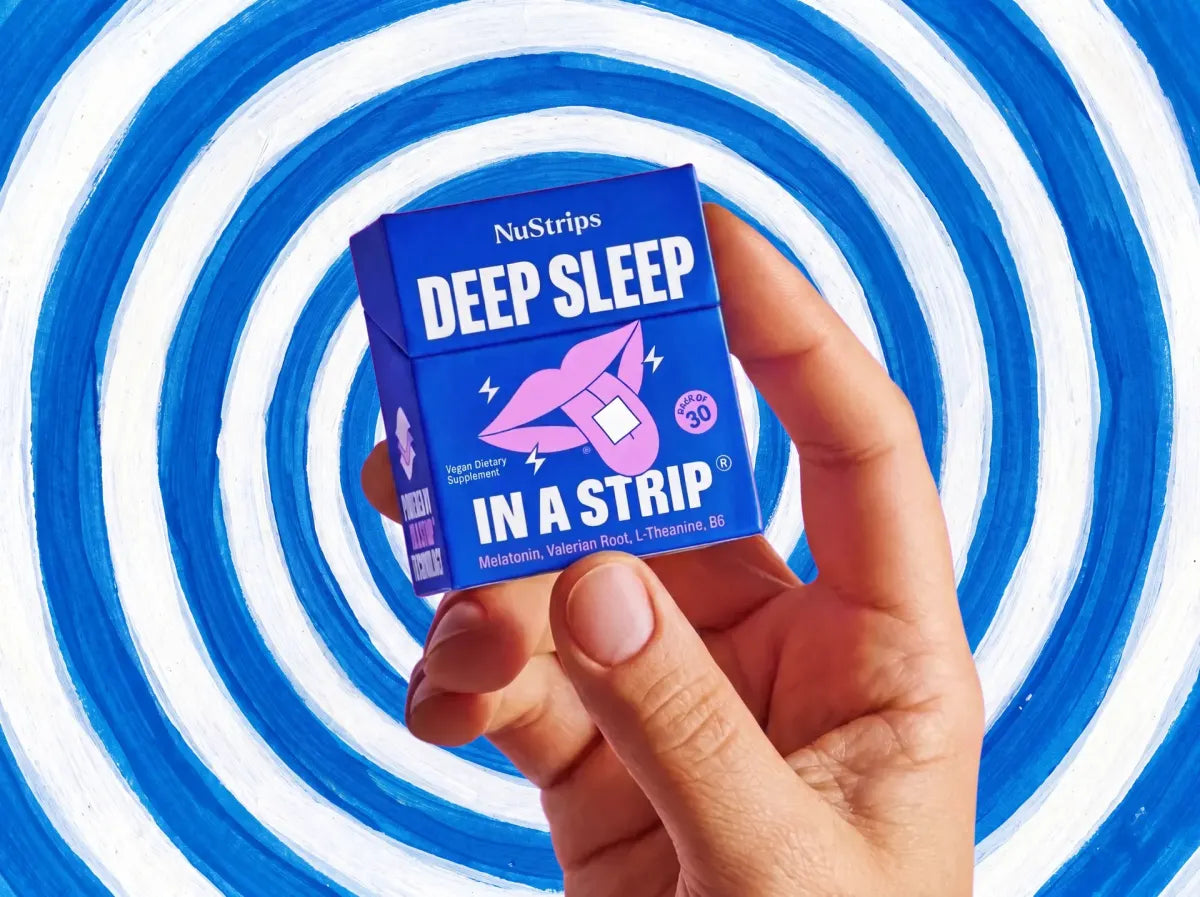
| Factor | Melatonin Strips (NuStrips Sleep) | Melatonin Gummies |
|---|---|---|
| Onset | Dissolves on your tongue in ~30 seconds; oral absorption starts right away, so most people feel it within ~15–30 minutes[4] | Must be chewed and digested first — closer to ~30–60 minutes |
| Melatonin dose | Fixed 5 mg in every strip | Ranged from 74% to 347% of the labeled dose in a 2023 JAMA analysis[1] |
| Added sugar | Zero grams (sweetened with monk fruit and stevia) | ~2–4 g per gummy |
| Cost per night | ≈$1 per strip (30-strip pack) | ≈$0.10–$0.30 per gummy — usually cheaper |
| Water needed | None | None, but chewing required |
| Travel | Flat, pocket-sized pack; won't melt | Can clump or melt in a hot bag or car |
| Taste | Light blueberry, gone in seconds | Candy-like and genuinely enjoyable |
Which one works faster — strips or gummies?
This is where the format matters most. A gummy has to be chewed, then broken down in your stomach and processed by your liver before any melatonin reaches your bloodstream — the same slow route a pill takes. That first-pass trip through the liver is brutal for melatonin specifically: clinical studies put oral melatonin's bioavailability at roughly 3–15%, meaning most of what's in a chewed-and-digested dose never actually makes it into your system.[2][3]
A strip skips part of that detour. Because it dissolves on your tongue, a portion of the melatonin is absorbed directly through the tissues in your mouth — a route studied precisely because the mouth's rich blood supply limits that first-pass breakdown and reaches a faster peak than a pill you gulp down with water.[4] In real life, that's the difference between lying there watching the clock and feeling your mind start to quiet down while you're still settling in. When your brain has a lot to say at 2 a.m., onset speed isn't a nice-to-have — it's the whole point. We break the mechanism down in plain English in how fast melatonin strips work.
The chart above tells the story: an on-your-tongue strip climbs into the bloodstream well ahead of a chewed gummy or a gulped-down pill, both of which stall while your digestive system does its slow work. If you want to see how strips compare to old-school tablets specifically, we lay it out in melatonin strips vs pills.
How much sugar is really in melatonin gummies?
Here's the part gummy brands don't print on the front of the jar: a melatonin gummy is basically a chewy candy with melatonin in it. Most carry 2–4 grams of added sugar per piece, and plenty of labels list a serving as two gummies. Do the simple math — two gummies a night at roughly 3 g each is about 6 g of sugar per night. Multiply by 365 nights and that's around 2.2 kg of added sugar in a year; at 4 g a gummy it's closer to 2.9 kg. You'd be eating the sugar equivalent of a small sack of candy every year, right before bed.
That matters more at night than at any other time of day. A late sugar hit means sticky teeth going onto the pillow, a small blood-sugar bump when you're trying to wind down, and a quiet contradiction — the entire goal is to calm down and drift off, not to snack. NuStrips Sleep strips have zero grams of sugar. They're sweetened with monk fruit and stevia, so you get a light blueberry taste that's gone in seconds — no candy, no sugar spike at 9 p.m., nothing to brush off your teeth afterward. It's a small thing that compounds night after night after night.
Every order is backed by our 60-day money-back guarantee — melt one, sleep on it, and if it's not for you, we'll refund you. No hoops.
Are you actually getting the dose on the label?
This is the strongest argument against gummies, and it isn't our opinion — it's published research. In 2023, JAMA published an analysis of 25 melatonin gummy products sold in the US. The finding: 22 of the 25 (88%) were inaccurately labeled, with the actual melatonin measuring anywhere from 74% to 347% of the amount printed on the label. Some gummies had barely any melatonin; others packed more than three times the stated dose — and a few even contained CBD that wasn't clearly disclosed.[1]

Why dose precision matters for melatonin
Two things drive that gummy variability. First, melatonin can degrade inside a soft, moist gummy matrix over its shelf life, so the dose drifts downward the longer the jar sits open. Second, gummies are simply hard to manufacture uniformly, so piece-to-piece amounts vary. When you're taking something that shapes both your sleep and how you feel the next morning, "somewhere between 74% and 347%" isn't a range worth gambling on — too little and nothing happens, too much and you wake up groggy.
A strip is pre-measured and flat, so each one carries the same 5 mg of melatonin — no biting a gummy in half to guess a dose, no shelf-life drift. That consistency is exactly what customers notice night to night. As verified buyer Chuck L. put it: "It truly helps me fall asleep, and stay asleep. I don't feel groggy in the morning." If you want the full picture of how on-your-tongue absorption and our dosing work, our science page lays out the studies behind every claim.
Should you choose strips or gummies?
There's no single "best form of melatonin" for everyone — there's the best form for you. Here's the honest way to decide.
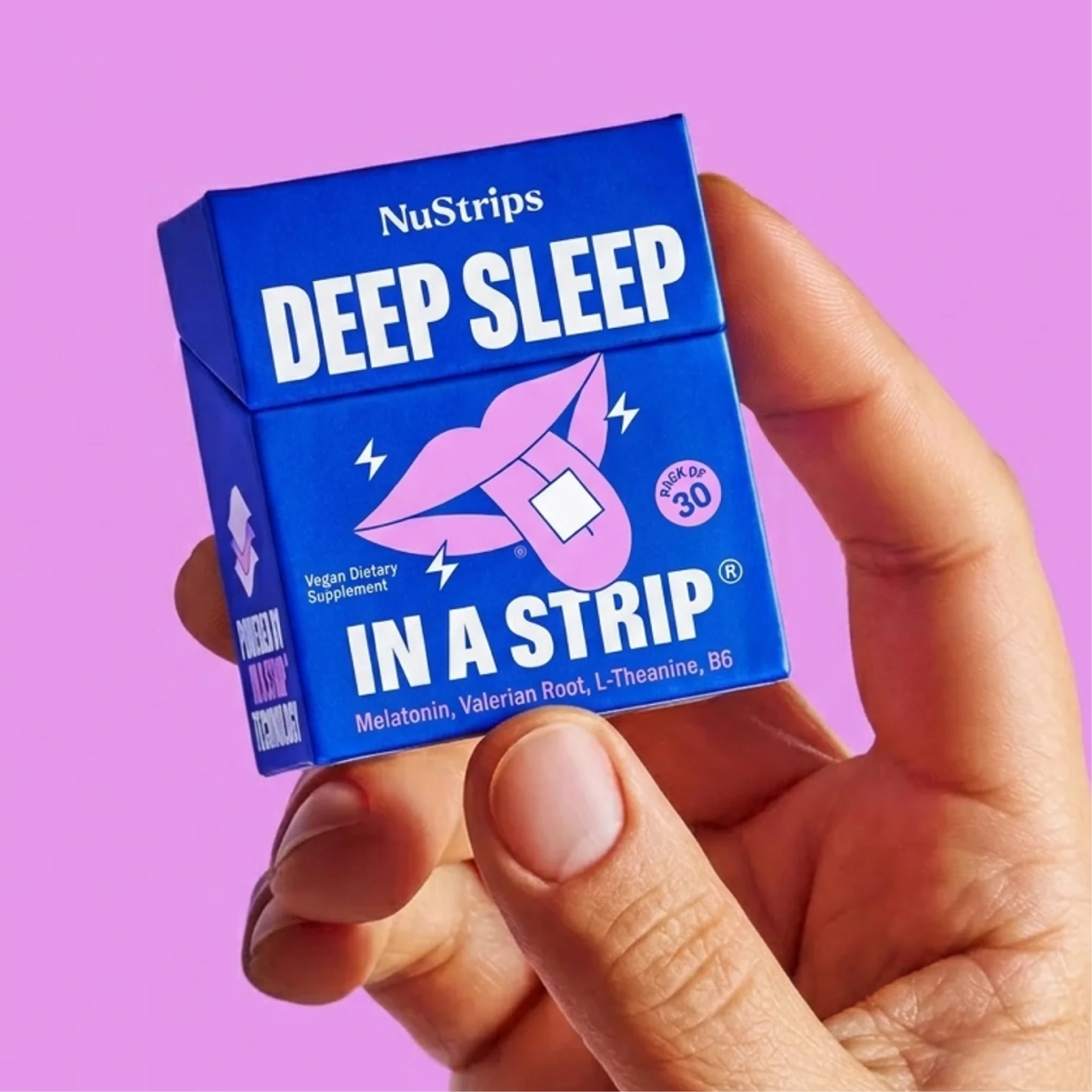
Choose melatonin strips if…
- You want the fastest onset — on-your-tongue absorption instead of waiting on digestion.[4]
- You don't want added sugar anywhere near your bedtime routine.
- You want to know the exact dose is the same every single night.
- You travel and need something flat, spill-proof, and melt-proof — no water required.
- You're tired of chewing or dislike the dentist-office feeling of candy before bed.
Choose melatonin gummies if…
- Taste is your top priority and you genuinely enjoy the ritual of a chewy treat.
- You want the lowest cost per dose and the sugar doesn't bother you.
- You prefer chewing something over letting a strip dissolve.
- You're buying from a brand that publishes third-party lab results, so you trust the dose.
We're not going to pretend gummies have no place. A quality, third-party-tested gummy from a trusted brand can absolutely do the job, and the lower price is a real, fair advantage. The honest trade-off is simple: you accept the added sugar and the dosing variability in exchange for taste and cost. But if onset speed, zero sugar, dose precision, and travel-friendliness are what you actually care about, strips win — and it's not close. You can compare the field in our roundup of the best melatonin strips, or start with the basics in what sleep strips are.
What are the side effects and drug interactions of melatonin?
Melatonin is the same active ingredient whether it comes as a strip, a gummy, or a pill, so this part applies to any form — and it's worth reading before you pick one. According to the National Center for Complementary and Integrative Health (NCCIH), short-term studies in adults report only mild side effects, most commonly headache, dizziness, nausea, and daytime sleepiness.[7] Long-term safety hasn't been well established, which is one reason a lower, precise dose (like a single 5 mg strip) is a sensible starting point rather than an oversized or unpredictable one.
Medications that can interact with melatonin
Melatonin can interact with several common medications. The NCCIH specifically notes that people with epilepsy and those taking blood-thinner (anticoagulant) medications should be under medical supervision when using melatonin.[7] Mayo Clinic adds that melatonin may interact with anticoagulants and anti-platelet drugs (raising bleeding risk), blood-pressure medications, diabetes medications that affect blood sugar, and immunosuppressants used after organ transplants.[9] Because melatonin is processed by the liver enzyme CYP1A2, other medicines that use the same pathway can also change how much melatonin is in your system.[7]
None of this makes melatonin dangerous for most healthy adults — but it does mean that if you take a prescription medication, are pregnant or breastfeeding, or have an ongoing health condition, you should talk to your doctor or pharmacist before starting melatonin in any form. That guidance is the same for strips and gummies alike.
What's actually in NuStrips Sleep strips?
No mystery mixes and no guessing — here's the full active lineup in every Sleep strip, at the exact doses:
- Melatonin — 5 mg: your body's own sleep-signal hormone, to help you fall asleep faster†
- L-Theanine — 10 mg: an amino acid from tea that supports a calm, quiet mind without leaving you sedated†[5]
- Valerian Root Extract — 15 mg: a traditional herb studied in a meta-analysis for supporting better sleep quality†[6]
- Vitamin B6 — 5 mg (295% DV): a cofactor your body uses in its own melatonin and serotonin pathway†
Melatonin plus two calming botanicals — real, named ingredients at doses you can actually see — is why strips also hold their own as one of the best natural sleep aids, not just a melatonin delivery trick. NuStrips created the oral strip supplement category, with more than 20M+ strips sold since 2020.

That precision is built in, not promised. Every Sleep strip is made in a US FDA-registered facility, produced under NSF-certified cGMP standards, third-party lab-tested by Eurofins, and individually sealed for dosage, safety, and quality. It's the opposite of guessing at a gummy jar. With a locked 4.36★ rating across 5,034 reviews and 10,000+ verified reviews site-wide, the format has been road-tested by a lot of light sleepers.
We're confident enough to back every order with a 60-day money-back guarantee, free US shipping over $40, and shipping within 24 hours. Read the customer reviews or compare the best melatonin strips before you decide.
FAQ
Do melatonin strips work faster than gummies?
Generally, yes. A gummy has to be chewed and digested in your stomach before melatonin reaches your bloodstream. A strip dissolves on your tongue, so part of the dose is absorbed through the tissues in your mouth — a route designed to limit the first-pass liver breakdown that destroys most oral melatonin, so most people feel it within about 15–30 minutes.[2][3][4]
Are melatonin gummies bad for you?
Not inherently. The two honest downsides are added sugar (typically 2–4 g per gummy) and dose inconsistency — a 2023 JAMA analysis found 88% of tested gummies were inaccurately labeled, ranging from 74% to 347% of the stated melatonin. A quality, third-party-tested gummy can still be fine if the sugar doesn't bother you.[1]
What's the best form of melatonin?
It depends on what you value. Strips win on onset speed, zero sugar, dose precision, and travel. Gummies win on taste and price. Pills are usually the cheapest but the slowest, since they're gulped down with water and processed through the liver first. For most people who care about fast, consistent, sugar-free dosing, an on-your-tongue strip is the best form of melatonin.
How much melatonin is in a NuStrips Sleep strip?
Each Sleep strip has a pre-measured 5 mg of melatonin, plus 10 mg L-Theanine, 15 mg Valerian Root Extract, and 5 mg Vitamin B6. Because it's a flat, pre-dosed strip, every one carries the same amount — no biting a piece in half to guess.
Do melatonin strips have sugar?
NuStrips Sleep strips have zero grams of sugar. They're sweetened with monk fruit and stevia for a light blueberry taste, so there's no bedtime sugar hit and nothing to brush off your teeth afterward. By comparison, two gummies a night can add up to roughly 2–3 kg of sugar over a year.
Can I give melatonin strips to my kids?
Not without talking to your pediatrician first. Melatonin isn't regulated for children the way prescription medicines are, and a CDC report found pediatric melatonin ingestions reported to poison control rose 530% between 2012 and 2021, with most cases being accidental ingestions by young children.[8] NuStrips Sleep is formulated and dosed for adults. Always store it out of children's reach and speak with your child's doctor before giving melatonin to a child.
What are the side effects of melatonin strips?
Melatonin's reported side effects are usually mild — NCCIH lists headache, dizziness, nausea, and daytime sleepiness in short-term adult studies.[7] The active ingredient is the same in any format, so this applies to gummies and pills too. If you're pregnant, breastfeeding, or managing a health condition, check with your doctor first.
Does melatonin interact with other medications?
It can. Melatonin may interact with blood thinners, blood-pressure medications, diabetes medications, immunosuppressants, and seizure medications, so anyone taking these should use it only under medical supervision.[7][9] Talk to your doctor or pharmacist before combining melatonin — in any form — with a prescription.
Is it safe to take melatonin strips every night?
Many people use melatonin nightly, and short-term studies report only mild side effects, but long-term safety hasn't been firmly established.[7] A precise, modest 5 mg dose is a sensible approach, and it's worth checking with your doctor if you plan to use any melatonin product long term.
Can I bring melatonin strips through TSA airport security?
Yes. Melatonin strips are a solid supplement, not a liquid, so they aren't affected by TSA's 3-1-1 liquids rule — the flat pack slips into a bag or pocket and needs no water. That's a big reason travelers prefer strips over gummies, which can clump or melt in a hot carry-on.
- Cohen PA, et al. Quantity of Melatonin and CBD in Melatonin Gummies Sold in the US. JAMA (2023). https://jamanetwork.com/journals/jama/fullarticle/2804077
- DeMuro RL, et al. The Absolute Bioavailability of Oral Melatonin. Journal of Clinical Pharmacology (2000). https://pubmed.ncbi.nlm.nih.gov/10883420/
- Andersen LPH, et al. Pharmacokinetics of oral and intravenous melatonin in healthy volunteers. BMC Pharmacology and Toxicology (2016). https://pmc.ncbi.nlm.nih.gov/articles/PMC4759723/
- Ait Abdellah S, et al. Melatonin oral-spray bioavailability and pharmacokinetics. Drugs in R&D (2023). https://pmc.ncbi.nlm.nih.gov/articles/PMC10439092/
- Hidese S, et al. Effects of L-Theanine Administration on Stress-Related Symptoms and Cognitive Functions. Nutrients (2019). https://pmc.ncbi.nlm.nih.gov/articles/PMC6836118/
- Bent S, et al. Valerian for Sleep: A Systematic Review and Meta-Analysis. American Journal of Medicine (2006). https://pmc.ncbi.nlm.nih.gov/articles/PMC4394901/
- National Center for Complementary and Integrative Health (NCCIH). Melatonin: What You Need To Know. https://www.nccih.nih.gov/health/melatonin-what-you-need-to-know
- Lelak K, et al. Pediatric Melatonin Ingestions — United States, 2012–2021. CDC MMWR (2022). https://www.cdc.gov/mmwr/volumes/71/wr/mm7122a1.htm
- Mayo Clinic. Melatonin — Drug interactions and safety. https://www.mayoclinic.org/drugs-supplements-melatonin/art-20363071
† These statements have not been evaluated by the Food and Drug Administration. This product is not intended to diagnose, treat, cure, or prevent any disease.