Your Phone Is the Drug You're Most Addicted To
Last updated: 2026-07-27
Your phone runs a dopamine loop that keeps you scrolling past midnight, blocks the wind-down signal your brain needs, and leaves you tired-but-wired at 1am. Then you paper over the dead next day with an energy drink that crashes you again. The fix isn't willpower—it's swapping the ritual: a melatonin strip on your tongue at night, clean caffeine plus L-theanine by day.
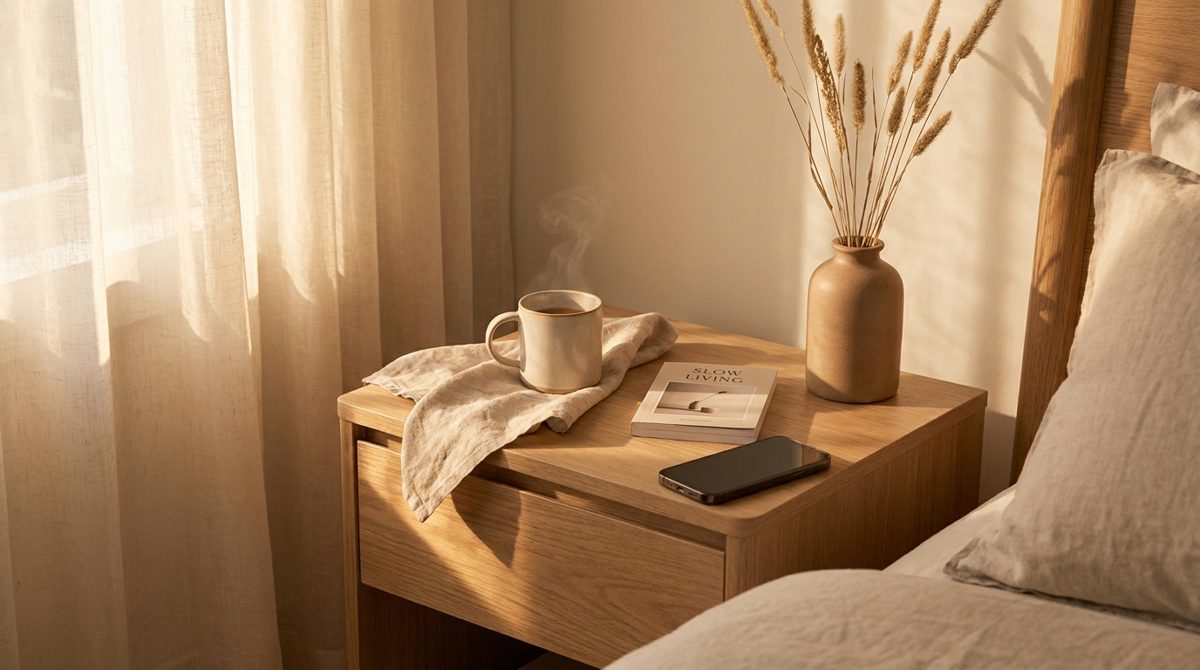
- The scroll is a dopamine slot machine—variable rewards keep your brain awake exactly when it should be shutting down.
- Screen light in the hours before bed can suppress melatonin, the hormone that tells your body it's night (Harvard Health).
- You can't out-discipline a habit loop; you replace the trigger. Swap the phone for a 30-second strip ritual that gives your hands something else to do.
- Melatonin in pills and gummies loses most of its dose to first-pass liver metabolism (~3–15% bioavailable; DeMuro 2000). A strip dissolves on your tongue.†
- The next-day fix isn't a 27g-sugar energy drink that crashes you—it's caffeine paired with L-theanine for focused, jitter-free alertness.†
Let's be honest about the thing in your hand. You reach for it before you're awake and you're still holding it when you should be asleep. Nobody handed you a prescription, but you're on a dose schedule tighter than any medication—every few minutes, all day, and worst of all, in bed.
We're a supplement company, so yes, we're biased. We'd love to sell you the stack. But here's the data anyway, because the argument holds up without the sales pitch: the reason you can't sleep and can't focus the next day is the same loop, running in two directions. Understand the loop, and you stop fighting the wrong battle.
Why can't I sleep after looking at my phone?
Two things are happening at once, and they compound.
First, the content. Social feeds, short video, the endless refresh—these are engineered around variable rewards. You don't know if the next swipe delivers something great, so your brain keeps pulling the lever. That's the same mechanism that makes slot machines sticky, and researchers have documented how dopamine drives that seeking behavior (Berridge & Robinson, NIH). Your body wants to sleep. Your reward system wants one more scroll. The reward system usually wins.
Second, the light and the arousal. Late-evening screen exposure can suppress melatonin—the hormone that signals night and helps you feel sleepy (Harvard Health). Layer that on top of a nervous system that's still pinging from group chats, doom headlines, and work Slack at 11:47pm, and you've built the perfect anti-sleep environment. You're exhausted and you're activated. Tired but wired.
Notice what's missing from that picture: any actual off switch. A book ends. A TV show ends. The feed never ends—that's the design. Every platform you open at night was built by teams whose entire job is to make sure you don't put it down. When you can't fall asleep after an hour of scrolling, you're not failing at bedtime. You're succeeding at exactly what the app was built to make you do. That reframe matters, because it moves the problem from "what's wrong with my discipline" to "what ritual do I put in the way of the reach."
You can't willpower a dopamine loop. You swap the ritual.
This is the part most sleep advice gets wrong. "Just put your phone down" is like telling someone to just stop reaching for a habit. The reach is automatic. What works is substitution—give the hand and the brain a different, smaller thing to do at the exact moment the craving fires. That's why the 30-second wind-down ritual matters more than another lecture about screen hygiene.
NuStrips · the honest comparison
3 strips. One stack. For better sleep, all-day energy, and a calm mind & body.
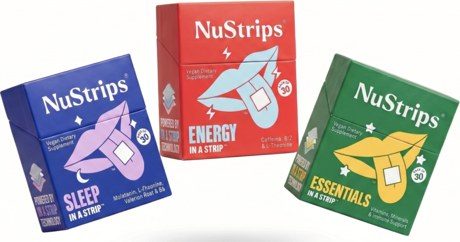 NuStrips ★ Sleep · Energy · Essentials strips |
📱 No Supplements coffee · Red Bull · all-nighters |
 Basic OLLY · Nature Made · Nature’s Bounty |
 Premium AG1 · IM8 · Ritual · Grüns |
 Luxe Full Premium set + Trackers (Whoop, Oura) + Healthy Meals 3×/day |
|
|---|---|---|---|---|---|
| Absorption & speed | Full & Fastoral absorption | N/A | Slowlost to digestion | Slowlost to digestion | Slowlost to digestion |
| Closes gaps in nutrition | ✓20 actives | ✗ | ✓ | ✓ | ✓expensive meals |
| Fixes sleep | ✓ | ✗ | ✓often unreliable | Maybe2nd product for +$70 | ✓ |
| Gives you energy | ✓no jitters | ✓jitters and crash | ✗ | Maybe$40 mushroom coffee | ✓ |
| Calms stress | ✓ashwagandha | ✗raises cortisol | Maybewith a 2nd product | Maybe4th product | ✓ |
| Tastes good | ✓all 3 strips | Maybeacquired taste | Maybegummies, not pills | ✗tastes like dirt | ✓healthy meals |
| Travels with you | ✓pocket-size, no water | N/A | ✗bulky bottles | ✗tub, shaker & water | ✗a suitcase of gear |
| Price | $69.42/mo~$2/day | ~$110/moin coffee | $60–90/mo | $79–280/mo3–4 products | $650–1,500+ |
Anything you take by pill, gummy, or greens powder is digested first and can lose much of its active dose along the way; NuStrips strips dissolve on your tongue in seconds. Over-the-counter sleep aids are frequently unreliable, and independent testing (JAMA, 2023) found most melatonin gummies varied widely from their labeled dose. “Luxe” assumes the full premium stack plus devices and prepped meals — the same coverage NuStrips gives, at 10×+ the price. Prices current as of July 2026 and may change.
Does blue light really lower melatonin?
The short version: evening light exposure—including the light from screens—can push back melatonin release and delay the signal that it's time to sleep. Harvard Health has covered how light at night can suppress melatonin secretion and shift your internal clock. It's not the only villain (the content and the arousal matter at least as much), but it's real, and it's stackable with everything else your phone does to you at night.
Here's a useful way to hold it: light is the accelerator on your body clock, and the wrong light at the wrong time nudges the clock later. Your brain reads bright, blue-heavy light as "it's still daytime, stay up." So the phone isn't only feeding your reward system—it's quietly arguing with your circadian rhythm, telling it the sun hasn't set. Dim the room, warm your screens, and you soften that argument. But dimming alone rarely fixes a loop this strong, because the content is still pulling. That's why light hygiene and ritual substitution work better together than either does alone.
Here's the catch nobody tells you: even if you do everything right and finally reach for melatonin to help wind down, the format you choose matters. Most people grab pills or gummies. And melatonin taken that way is largely lost to first-pass liver metabolism—one review found oral melatonin bioavailability in the range of roughly 3–15% (DeMuro et al., 2000). You take a dose; a small fraction survives the trip.
A NuStrips melatonin sleep strip dissolves on your tongue in seconds—no water, no chewing, no 2g of sugar riding along like it does in a gummy. The Sleep formula is precise and small: Melatonin 5mg, L-Theanine 10mg, Valerian 15mg, and Vitamin B6 5mg (295% DV). It's designed to support winding down and falling asleep,† not to sedate you into a coma. If you want the format breakdown, we laid out melatonin strips vs pills in plain terms.
Am I tired but wired because of my phone?
Probably, at least in part. "Tired but wired" is what happens when your body is depleted but your nervous system won't stand down. The phone feeds both sides: it keeps you mentally activated late (wired) while stealing the sleep you need (tired). Then morning arrives, you're running on five broken hours, and you reach for the second drug in the loop.
The caffeine bomb.
An energy drink is the classic move. A Red Bull carries 80mg of caffeine and 27g of sugar. Feels like a rescue for about ninety minutes. Then the sugar dips and the adenosine your caffeine was blocking comes flooding back—the documented crash. So you drink another. A daily energy-drink habit runs you roughly $100 a month to feel worse in a predictable rhythm. You didn't fix the tired. You rented over it, at interest.
The phone steals your night. The energy drink mortgages your afternoon. Same loop, two crashes.
This is the causal bridge almost nobody connects: bad sleep and bad next-day energy aren't two separate problems. They're one loop. The phone breaks the night; the broken night wrecks the day; the stimulant you use to survive the day wrecks the next night. Round and round. If you only attack one end, the other end pulls you back in.
And the day cost shows up as more than fatigue—it shows up as focus. A night carved up by scrolling doesn't just leave you tired; it leaves you scattered. You feel it as the inability to sit with one task, the phantom urge to check something, the way your attention keeps skittering off the thing in front of you. Part of that is simple sleep debt. Part of it is that the same reward-seeking loop that kept you up is still running the next morning, still pulling your attention toward the feed instead of the work. Screen time doesn't only tax your night. It taxes the quality of your next day's attention, which is exactly when you can least afford it.
How do I reset my dopamine and sleep cycle?
You don't need a monastery. You need to replace two rituals and stop expecting willpower to do a habit's job.
A quick word on "dopamine detox," since the phrase is everywhere. You cannot literally drain and refill your dopamine like a gas tank—it's a signaling chemical, not a fluid, and the pop-science version oversells it. But the sensible core is real: if you dial down the highest-intensity, most compulsive inputs (the infinite feed, the autoplay, the 11pm doom-refresh), the smaller, slower rewards of ordinary life start to register again. You don't detox dopamine. You stop drowning it out. And the most practical place to start is the single moment it fires hardest against your sleep: the phone reach in bed.
Night: swap the scroll for a strip. When your hand reaches for the phone in bed, give it the Sleep strip instead. Peel, place on your tongue, let it dissolve. It's a physical action that occupies the same moment the craving fires—which is the whole point of substitution. Melatonin, L-theanine, and valerian support winding down and falling asleep;† the ritual itself starts breaking the phone reach. We wrote a whole playbook on this: swap the scroll for a 30-second ritual.
Day: replace the sugar crash with clean, level energy. Instead of the 80mg-caffeine, 27g-sugar rollercoaster, the Energy strip pairs Caffeine 50mg with L-Theanine 30mg and Vitamin B12 6mcg (250% DV). Caffeine plus L-theanine is the combination associated with focused, jitter-free alertness—the calm-alert lane, not the spike-and-crash lane.† Berry-smoothie flavor, dissolves on your tongue, no shaker, no sugar. Here's the rundown on clean energy strips.
The third strip, Essentials, isn't glamorous but it closes the loop: a full daily multivitamin plus Ashwagandha KSM-66 40mg (clinically studied to support healthy cortisol levels†), L-Theanine 10mg, Zinc 6mg, and Vitamin D3 4000 IU. Three strips, one stack, ~20 actives across the day-night cycle, about $2 a day. No fridge. No $99/month powder. Just your tongue and thirty seconds, twice.
Notice how small that is. The average real supplement stack runs about $172 a month across seven or eight separate products (SuppCo, 60k stacks analyzed)—a cabinet of bottles, tubs, and shakers most people abandon within weeks because the routine is too heavy to keep. The practical research-backed sweet spot is more like four to six items you'll actually take every day. Three strips, taken in the two moments that already anchor your night and morning, land inside that lane on purpose. A routine you skip helps nobody. The point of the stack is that it's small enough to survive real life—and small enough that you'll still be doing it in three months, which is the only version of a routine that ever changes anything.
And it's not just us saying the stack holds up. On FrontrowMD, clinicians recommend the NuStrips Total Wellness Kit as the #1 clinician-recommended product—out of roughly 2,818 products—and they're not compensated to do it. Sleep is the #1 recommended sleep aid; Energy is the #1 recommended coffee alternative. NuStrips created the oral strip supplement category back in 2020, and we've sold 20M+ strips since, with 9,450+ verified reviews across the line.
There's one more reason the two-ritual swap works better than a willpower crackdown: it respects how habits actually change. Behavior researchers describe habits as a cue-routine-reward loop, and the hardest part to move is the cue. You can't easily delete "I'm in bed, lights off, hand drifts to the nightstand." That cue is going to fire. What you can change is the routine attached to it. Leave the phone across the room and the cue still fires—you just lie there wanting it. Put the Sleep strip exactly where the phone used to be, and the same cue now triggers a different, smaller routine that ends with you winding down instead of winding up. Same trigger, better response. That's the whole trick, and it's why "just have more discipline" keeps failing people who are, in every other part of their life, extremely disciplined.
What's a faster alternative to melatonin pills?
A strip that dissolves on your tongue. That's the honest answer. When melatonin is taken as a pill or gummy, most of the dose runs the first-pass liver gauntlet before it ever reaches your bloodstream—roughly 3–15% survives (DeMuro 2000). Dissolving it on your tongue skips that particular bottleneck for a faster, cleaner onset.† No water, no chewing, no sugar tagging along.
Compare the formats honestly:
| Format | Onset | Added sugar | Water needed | Pocketable |
|---|---|---|---|---|
| Melatonin pill | Slower; first-pass loss | None | Usually | Bottle |
| Melatonin gummy | Slower; first-pass loss | ~2g/serving (e.g. OLLY Sleep) | No | Jar |
| NuStrips Sleep strip | Fast; dissolves on tongue† | None | No | Flat strip, fits anywhere |
None of this means gummies "do nothing"—it means the format has friction, and sugar, that a strip doesn't. If you've been grabbing a jar of gummies off the nightstand at midnight, you already know the ritual. A strip just does it faster, cleaner, and without waking your blood sugar on the way to sleep. There's a category footnote worth knowing, too: an analysis of melatonin gummies published in JAMA found that the actual melatonin content in many products didn't match the label—so with gummies you're often not even sure what dose you're getting. A precise, printed 5mg strip removes that guesswork.
Stop scrolling. Start stripping. Thirty seconds beats a lecture about screen time.
Here's the reframe worth keeping: you are not weak for being hooked. The phone was built by teams of very smart people to hook you. Your energy drink was engineered to feel like a rescue. The move isn't to hate yourself into discipline—it's to notice the two rituals running your night and your day, and to swap them for something smaller that works with your biology instead of against it. Melatonin strip at night. Clean caffeine plus L-theanine by day. One boring, reliable stack in between.
Start with one swap, not ten. Tonight, put the Sleep strip on the nightstand where the phone charges, and when your hand reaches out of habit, give it the strip first. Do only that for a week. Most people find the reach loses its grip faster than they expected—not because they got more disciplined, but because there was finally something else in the way. Once the night settles, the day gets easier to fix, because you're no longer starting it in a hole.
The phone will still be there. It just won't be running the whole show.


† These statements have not been evaluated by the Food and Drug Administration. This product is not intended to diagnose, treat, cure, or prevent any disease.
Methodology. “#1 Clinician’s Choice,” category rankings, and all clinician counts on this page are based on FrontrowMD’s publicly available clinician-share data as of July 16, 2026. Figures reflect the number of independent clinicians who share each product or brand on FrontrowMD (who are not compensated to do so) and may change over time.